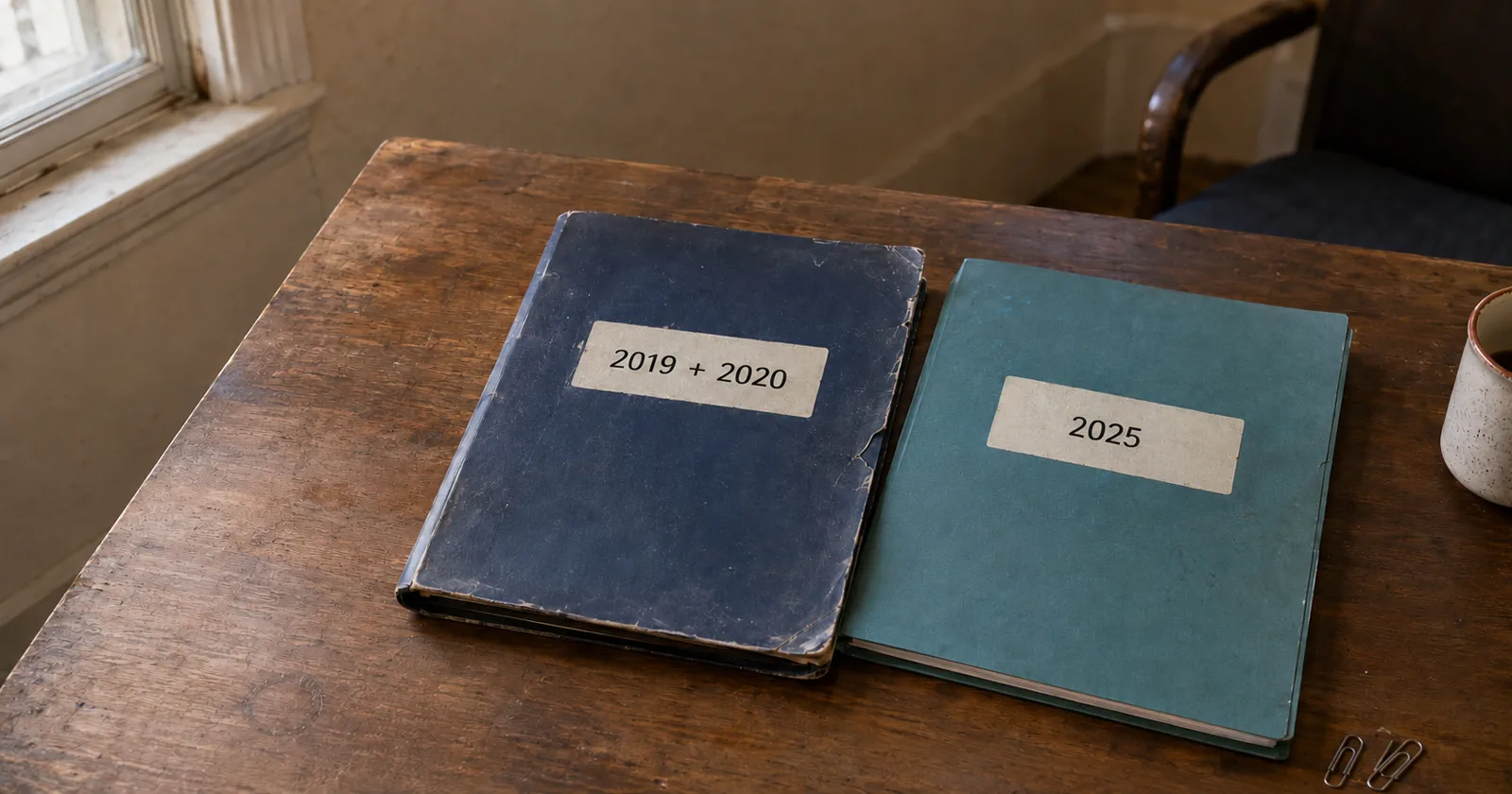
For about five months, PCC and MCC candidates get something credentialing exams almost never offer.
A choice.
Starting November 10, 2026, ICF makes the new PCC-MCC Exam available. The current ICF Credentialing Exam stays open through March 31, 2027. Test or retest inside that window and you can take either one.
On April 1, 2027, the choice closes. Anyone testing or retesting moves to the new exam.
So which one should you take?
The tempting answer is whichever one is easier. ICF says difficulty and the expected passing standard stay consistent across both. Set that aside anyway, because easier is the wrong question. The two exams ask you to demonstrate readiness differently, draw on different source documents, and put different kinds of pressure on you.
The right question is about your timeline, how you process written questions, and which standards you have actually prepared to apply.
What is changing
| Current ICF Credentialing Exam | New PCC-MCC Exam | |
|---|---|---|
| Availability | Through March 31, 2027 | Beginning November 10, 2026 |
| Total items | 78 | 80 |
| Format | 78 situational-judgment items | 44 situational judgment, 36 knowledge-based |
| Time | 180 minutes, including an optional break | 150 minutes, including an optional 10-minute break |
| Structure | Two sections of 39 scenarios | 18 knowledge, 22 scenarios, break, 18 knowledge, 22 scenarios |
| Tested standards | 2019 Core Competencies, 2020 Code of Ethics | Most recent Core Competencies and Code of Ethics |
| Competency domains | Same four | Same four |
| Result | PCC or MCC credential | The same PCC or MCC credential |
The current exam runs you through 78 coaching situations. For each one, you pick the best and worst actions from four. It is a sustained test of contextual judgment. Several responses sound reasonable and you rank what is on the page.
The new exam keeps that task and shrinks its share. You get 44 situational-judgment items and 36 direct multiple-choice knowledge questions, delivered in four alternating blocks: 18 knowledge questions, 22 scenarios, an optional break, then 18 more knowledge questions and 22 more scenarios.
ICF says knowledge questions involve less reading, which helps explain why the exam drops from 180 minutes to 150. Less reading is not less difficulty. A direct question can expose a gap you would have reasoned your way around inside a longer scenario.
Worth noting what does not move. Both exams assess the same four competency domains: Foundation, Co-Creating the Relationship, Communicating Effectively, and Cultivating Learning and Growth. This is a format change and a source-document update, not a new subject.
ICF lays out the details in its candidate guide to the updated exam.
This is also a choice between rulebooks
The format is half the change. The other half gets less attention and matters more.
The current ICF Credentialing Exam still tests the 2019 Core Competencies and the 2020 Code of Ethics. ICF revised both in 2025. The current exam does not reflect those revisions.
The new PCC-MCC Exam does.
ICF's position is that the differences do not require a major change in preparation. The competencies and ethical standards have not fundamentally changed, most existing preparation stays relevant, and no major shift in study approach is needed. I think that is broadly fair. Client agency still matters. Agreements still matter. Confidentiality, conflicts, boundaries, and scope still matter.
But "not fundamentally changed" and "identical" are different claims, and only one of them is being made.
My advice is narrower than ICF's reassurance. If you take the current exam, answer from the documents it tests. If you take the new one, prepare from the updated standards. Blending the versions because the language feels close is how candidates get confidently imprecise, and imprecision is exactly what these items are built to catch.
ICF has published a comparison of the 2019 and 2025 Core Competencies and an overview of the 2025 Code of Ethics changes. Whichever exam you choose, read them once. Not to memorize publication dates, but so you know which framework governs the item in front of you.
Who should consider the current exam
The current exam is likely your better option if your preparation is already mature.
You have studied the 2019 competencies and the 2020 ethics code. You have logged real hours ranking best and worst actions. You know which traps catch you when several responses look defensible. Your practice performance is stable, and you can realistically sit before March 31.
In that position, switching because a new exam has fewer scenario items creates work without creating an advantage.
The current exam also suits candidates who think well contextually. They can hold four imperfect actions against one specific situation without inventing details to justify a preference. They already understand that "I might say this in a session" does not establish that it is the strongest option available.
Its cost is reading volume and sustained comparison. Seventy-eight scenarios in two long blocks demands concentration most of the way through three hours. If situational judgment is precisely where your score keeps breaking down, familiarity by itself is not a reason to stay.
Who should consider the new exam
The new exam probably fits candidates who have not sunk deep preparation into the current format, or who demonstrate what they know better when it is asked directly.
Thirty-six items ask for one correct answer instead of a best-and-worst pair. If you know the standards cleanly but get tangled when four reasonable coaching responses compete for the same slot, that mix may suit you.
It also makes sense if your realistic testing date already sits late in the window. Preparing hard for an exam that vanishes a few days after you plan to sit adds pressure you do not need. And any retest on or after April 1 is the new exam regardless.
The updated source material is a third reason. If you trained primarily under the 2025 competencies and the current ethics code, testing on the framework you actually use beats maintaining an exam-only layer of older language in your head.
There is a real tradeoff. The combined format has no candidate history yet. At launch there will be fewer representative practice materials and no accumulated experience from other test takers. ICF has said a free tutorial will be available before November 10. Until official materials land, anyone telling you exactly what the new knowledge questions feel like is guessing.
Do not decide based on a rumor about difficulty
The moment the first appointments finish, the comparisons start. Somebody will report the new exam is easier because it has direct questions. Somebody else will say it is harder because knowledge questions give you nowhere to reason from.
Neither claim will be worth anything from a handful of experiences.
The formats reward different strengths. Situational items tax comparison, restraint, and contextual fit. Knowledge questions tax recall, precision, and your ability to separate two similar obligations without a story helping you get there.
You can prefer one format without that format being objectively easier.
ICF says difficulty and the expected passing standard remain consistent. Take that for what it is. An intention built into exam development, not a promise that both will feel the same to you.
Four questions to decide
1. When will you actually be ready?
Start with a date, not a preference. Ready now? Postponing for a new format adds uncertainty you do not need. Honest timeline already reaching into 2027? Building your prep around an expiring exam makes no sense.
2. Where do your misses come from?
Separate knowledge errors from judgment errors. Did you not know the governing principle, or did you know it and rank the options wrong anyway? The new exam tests both. The current exam concentrates almost entirely on the second. I break down how to run that diagnosis in Why You Keep Missing ICF Practice Questions.
3. Which standards have you studied?
Pull up your notes, course materials, and practice questions. Are they built on the 2019 and 2020 documents, or the 2025 updates? Do not assume the gap is too small to matter.
4. What does waiting cost you?
A delay can hit an application timeline, an employment requirement, a marketing plan, or a credential goal you already told someone about. A format preference should not quietly turn into a four-month delay with consequences you never priced.
How to prepare for each
For the current exam: stay disciplined about the tested sources. Practice full sets of situational-judgment items, not scattered singles, because stamina is part of what it measures. For every miss, explain why the strongest action beats the second strongest and why the weakest creates more risk than the other imperfect one.
For the new exam: split your preparation. You still need contextual judgment for 44 items, so do not abandon scenario work. Add direct retrieval practice for definitions, ethics, boundaries, competencies, and the distinctions that can be tested without a setup paragraph. Then practice switching between the two modes, because the exam alternates and settling into one rhythm is exactly what the structure prevents.
For either: do not mistake familiarity for readiness. A good practice score means something when you can explain the reasoning and repeat it on material you have never seen.
And keep in view what passing establishes. It demonstrates knowledge and written judgment. It does not demonstrate what your coaching does with a real client, which I wrote about in Passing the ICF Exam Does Not Prove You Can Coach.
Mechanics of the transition
If you are already in "ready for exam" status and want to wait for the new exam, ICF says to email support@coachingfederation.org. They will send you a sign-up form so you can take it once it is available on November 10. As the launch gets closer, candidates moving through the process will receive that form automatically.
If you test between November 10 and March 31, confirm which exam is selected when you schedule. If you test or retest on or after April 1, plan for the new one.
Pass either version during the transition and you earn the same credential.
That is the thing underneath the decision. You are not choosing between a real PCC and a lesser one. You are choosing how you would rather demonstrate the written portion of the same credentialing process.
Pick the format that fits your preparation, your timeline, and the evidence you already have about your own misses. Then stop shopping for an easier test and go prepare for the one you picked.